
Why ‘The Hazels’?
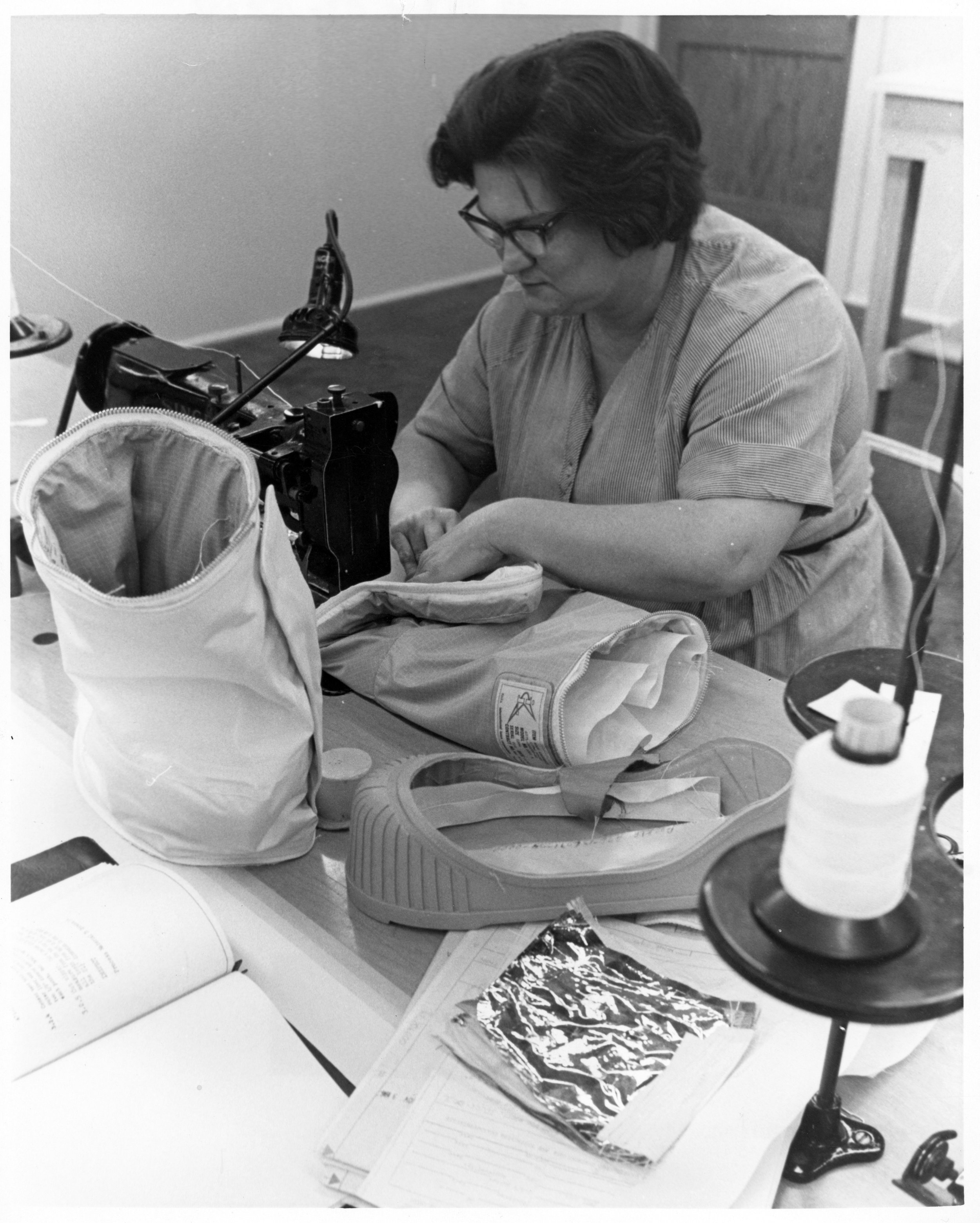
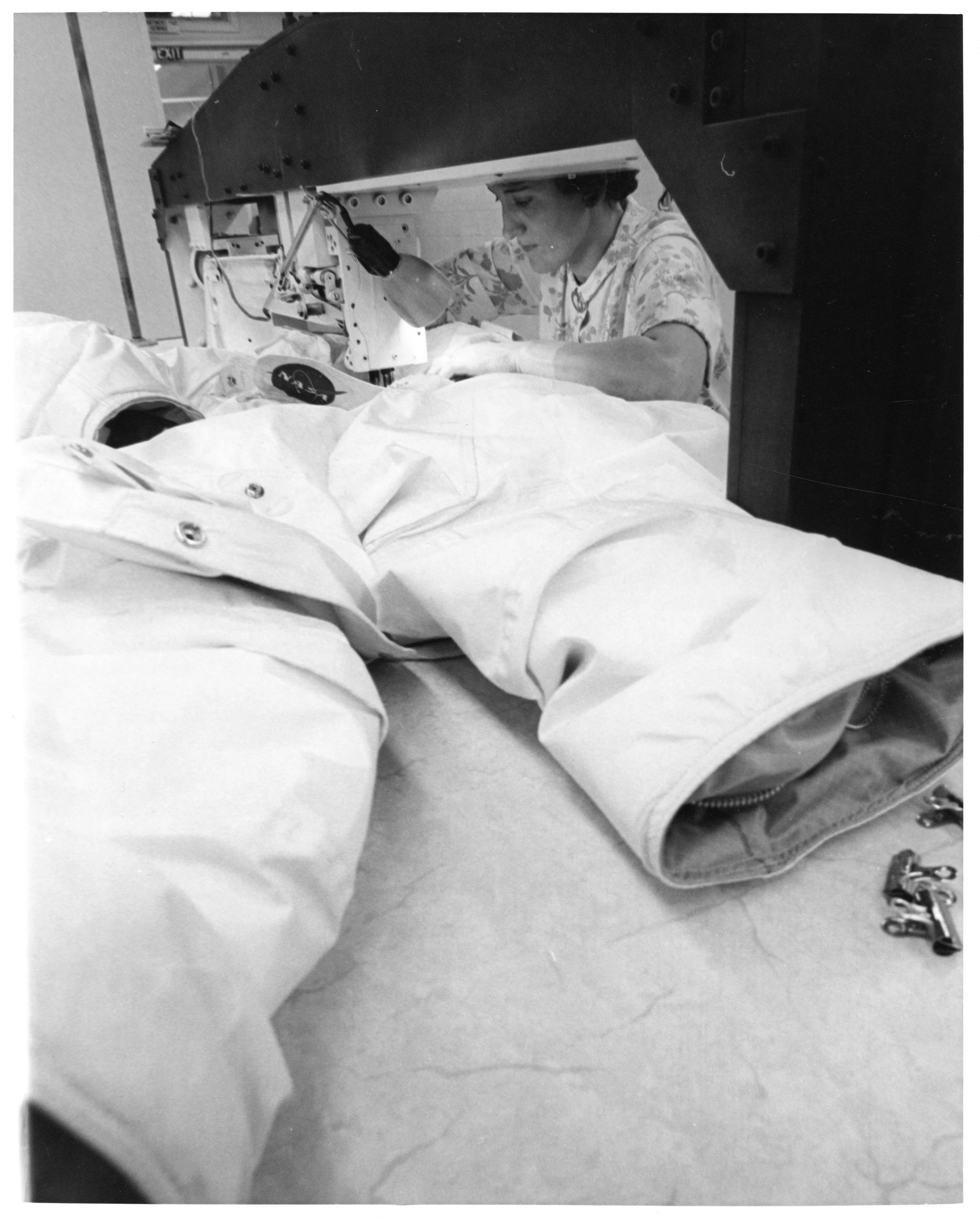
For far too long, women in the space industry have been written out of the history books and forgotten - much like our namesake Hazel Fellows - who was for years named as the woman in the photograph below from 1968 (picture source: NASA). Her image became an iconic representation of the numerous skilled women behind the Apollo space suits: seamstresses, pattern cutters, and assemblers. Very little is known about these women, many of whom were working-class and African American, who played a vital role in the design and construction of the spacesuits worn by all twelve men who have walked on the Moon.
In 2026, the Smithsonian announced that the photograph thought to be of Hazel Fellows, was in fact a photograph of a different woman - Jean Wilson, showing that women's identities and contributions to the space industry were disregarded and interchangeable.
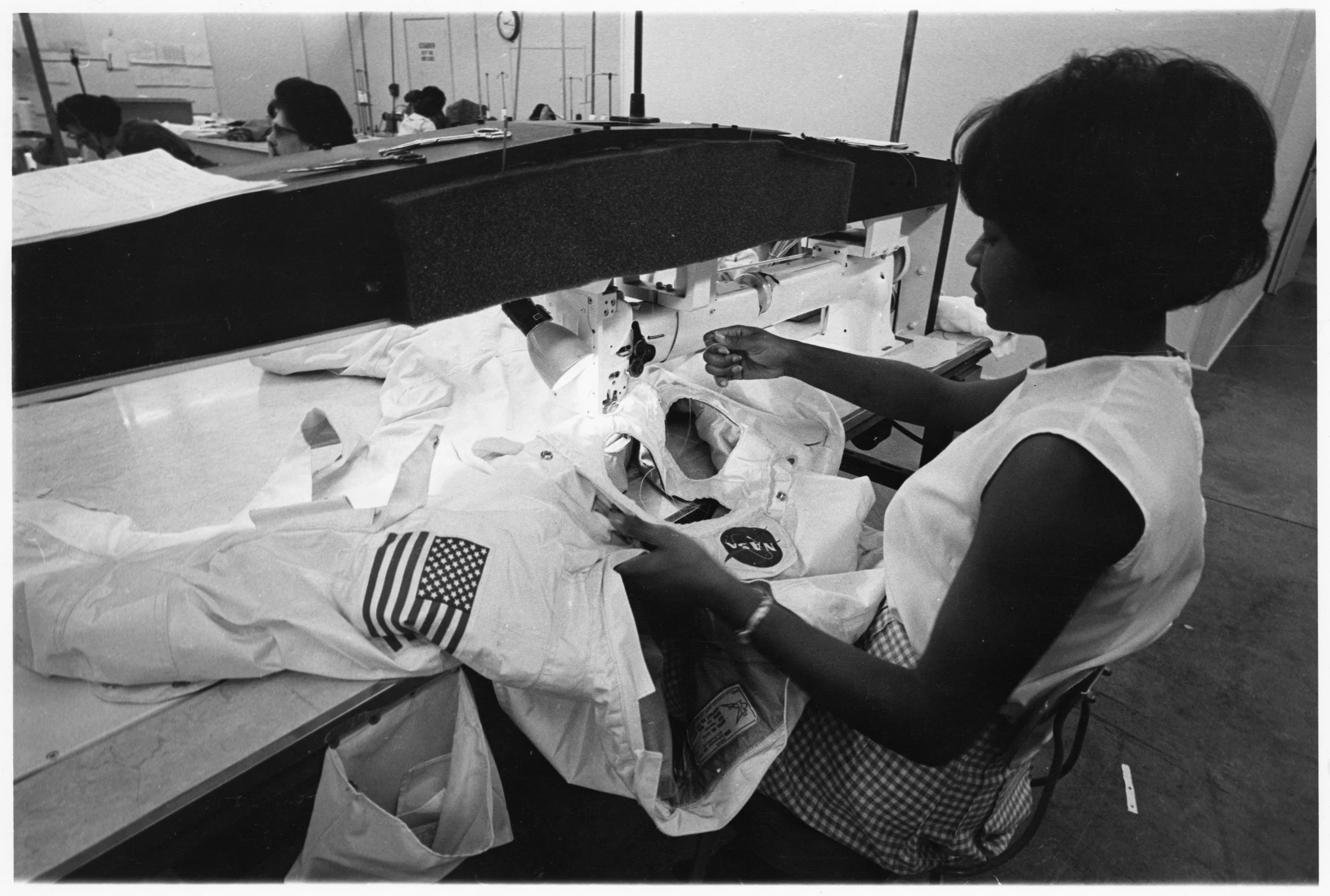
Incorrectly misnamed Hazel Fellows for almost 60 years, this widely circulated photograph has been reclaimed by Jean Wilson, the lead seamstress for Neil Armstrong's spacesuit. All images copyright @ NASA
Iona Allen constructed Neil Armstrong’s lunar boots, while Roberta Pilkington’s emergency repair enabled Apollo 17’s launch. Aylene Baker’s swift sewing of a replacement heat shield helped save the Skylab mission in 1973.
Largely overlooked by history, these women’s contributions deserve recognition. The contributions of ‘Hazel Fellows’, Jean Wilson and their many unnamed, long-forgotten, and mostly omitted colleagues are a salutary reminder that the skills needed by the space industry are broad, wide-ranging, and worthy of celebrating.
The Hazels honour pioneering women in the space industry, including ‘Hazel Fellows’, Jean Wilson, Iona Allen, Eleanor Foraker, Francine Burris, Henrietta Crawford, Velma Breeding, Roberta Pilkington, and Aylene Baker, who received little, if any, recognition or acknowledgement of their contributions to the success of the Apollo Missions.